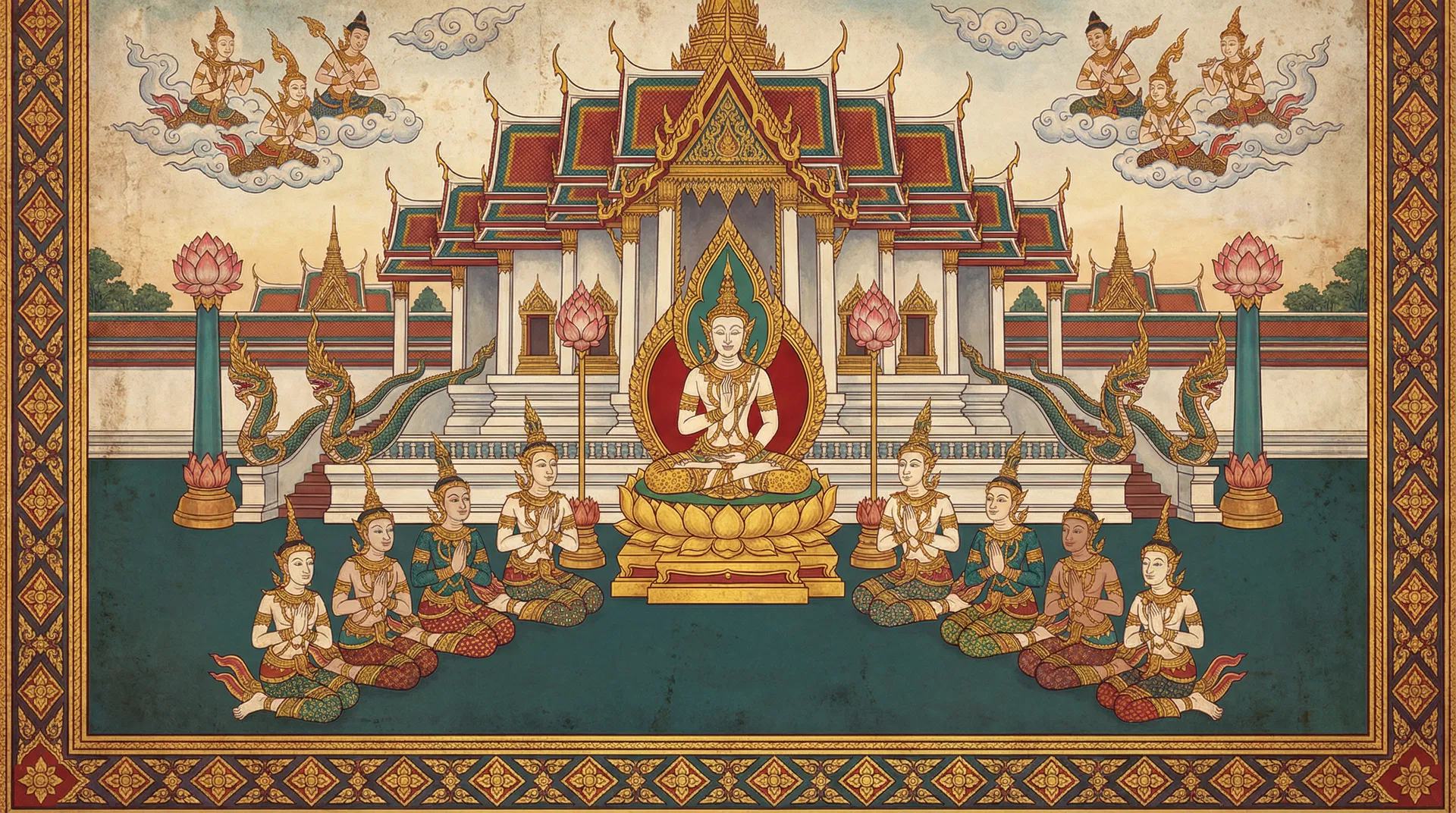
Mahasutasoma Jataka
Mahasutasoma Jataka
In the prosperous city of Indapatta, nestled in the heart of a vast and ancient land, reigned King Surasena, a monarch renowned for his wisdom and justice. His son, Prince Mahasutasoma, was a young man of extraordinary character, destined for greatness. He possessed a keen intellect, a compassionate heart, and a deep understanding of the Dhamma, the universal law of righteousness. He was, in essence, the Bodhisatta in this life, preparing to embody the ultimate virtue of non-violence.
Yet, even in this land of peace, the shadow of conflict could not be entirely dispelled. A neighboring king, King Kalabhu, driven by ambition and a thirst for power, harbored ill will towards King Surasena. He was a king who believed in the might of the sword, in conquest and subjugation. He saw Prince Mahasutasoma's growing influence and his commitment to peace as a threat to his own expansionist desires.
King Kalabhu, unable to defeat King Surasena in open warfare, resorted to treachery. He devised a cunning plan to lure the prince into a trap. He sent emissaries to King Surasena, bearing gifts and words of feigned friendship. "Your Majesty," they proclaimed, their voices smooth as silk, "King Kalabhu desires an alliance. He wishes to honor your noble son, Prince Mahasutasoma, by arranging a marriage with his own daughter, a princess of great beauty and virtue."
King Surasena, a wise and cautious ruler, sensed the insincerity behind the proposal. However, Prince Mahasutasoma, ever trusting and believing in the possibility of reconciliation through diplomacy, urged his father to accept. "Father," he said, his voice calm and reassuring, "let us extend the hand of friendship. Perhaps this alliance can bring lasting peace between our kingdoms. I am willing to go, to meet King Kalabhu and his daughter."
Despite his reservations, King Surasena, respecting his son's noble intentions, agreed. Prince Mahasutasoma, accompanied by a retinue of loyal attendants, set forth towards King Kalabhu's capital. He carried with him not weapons of war, but the pure intentions of peace and goodwill. He believed that truth and righteousness would ultimately prevail.
As Prince Mahasutasoma's procession neared King Kalabhu's city, the treacherous king revealed his true colors. He had gathered a vast army, hidden in ambush along the route. The moment the prince entered the designated area, the soldiers emerged, surrounding him and his retinue. The prince's attendants, though brave, were outnumbered and overwhelmed.
Prince Mahasutasoma, seeing his men in peril, did not resort to violence. Instead, he stepped forward, his voice resonating with calm authority. "Hold!" he commanded. "Why do you attack us? We came in peace, seeking an alliance."
King Kalabhu, emerging from behind his soldiers, sneered. "Peace? Alliance? Foolish prince! Your father's kingdom is ripe for the taking. I have no need for alliances; I have need for conquest! You have walked willingly into my trap, and now you and your men shall be my prisoners."
The prince, undeterred, looked at King Kalabhu with eyes that held no fear, only profound pity. "King Kalabhu," he said, his voice gentle yet firm, "you seek power through violence, but true strength lies in compassion and non-violence. You believe you have captured me, but in reality, you have captured only my body. My spirit, my commitment to truth, remains free."
King Kalabhu, angered by the prince's defiance, ordered his capture. Prince Mahasutasoma, though bound and disarmed, remained steadfast in his resolve. He refused to engage in violence, even when provoked. He understood that to retaliate with force would be to betray the very principles he stood for.
News of the prince's capture reached King Surasena. The king, though heartbroken, did not succumb to the urge for revenge. Instead, he summoned his wisest advisors. "My son has been taken," he declared, his voice heavy with sorrow but clear in its purpose, "but we must not respond with anger or violence. We must find a way to secure his release through wisdom and righteousness, upholding the principles he embodies."
Meanwhile, in King Kalabhu's prison, Prince Mahasutasoma continued to radiate peace. He spoke to his captors, sharing wisdom and encouraging them to examine their own actions. He showed them that violence breeds only more violence, and that true liberation comes from understanding and compassion.
King Kalabhu, witnessing the prince's unwavering composure and the effect he had on his guards, began to feel a flicker of unease. He had expected fear and defiance, but instead, he found serenity and wisdom. He saw that his own ambition had blinded him to a higher truth.
Eventually, the prince's unwavering commitment to non-violence, combined with the wisdom of King Surasena's diplomatic efforts, began to wear down King Kalabhu's resolve. The prince's attendants, who had managed to escape, carried messages of peace and understanding back to their king, emphasizing the prince's steadfast adherence to his principles.
Finally, King Kalabhu, confronted with the futility of his aggression and touched by the prince's profound example, relented. He ordered Prince Mahasutasoma's release, not out of defeat, but out of a dawning realization of the futility of his violent path. The prince, freed from his bonds, did not gloat or seek retribution. He simply bowed to King Kalabhu, acknowledging the change that had begun within him.
Prince Mahasutasoma returned to Indapatta, not as a conqueror, but as a beacon of peace. He had demonstrated that true strength lies not in the ability to wage war, but in the courage to uphold non-violence, even in the face of extreme adversity. His example inspired both kingdoms, fostering an era of understanding and cooperation, proving that the most powerful weapon is a compassionate heart and an unwavering commitment to truth.
— In-Article Ad —
💡Moral of the Story
Non-violence (Ahimsa) is the highest form of strength and courage. True peace is achieved not through conquest, but through understanding, compassion, and adherence to righteous principles.
Perfection: Non-violence (Ahimsa), Truthfulness (Sacca), Generosity (Dana)
— Ad Space (728x90) —
More Jataka Tales You May Enjoy
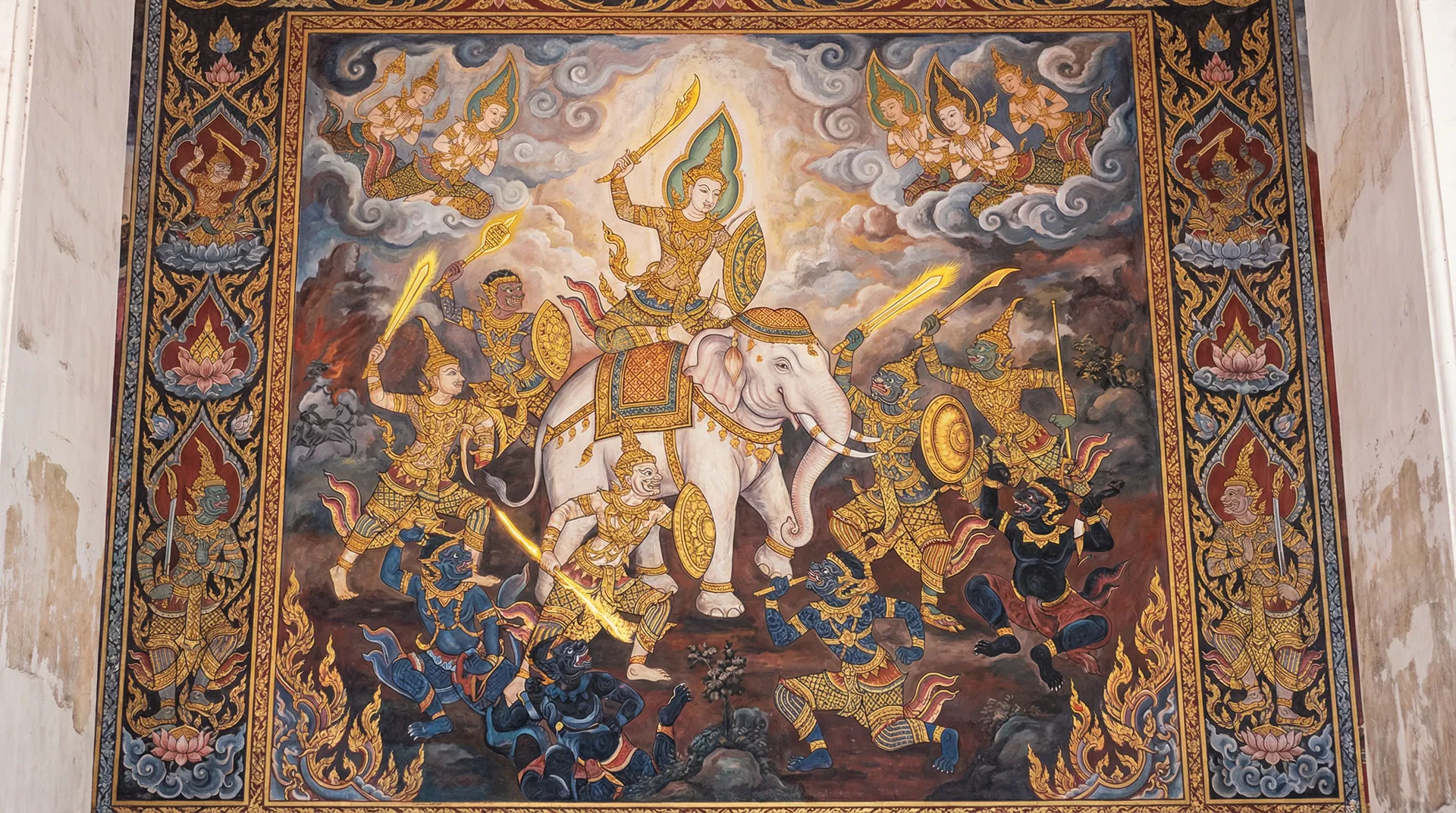 521Mahānipāta
Mugapakkha Jataka
Mugapakkha JatakaIn the ancient kingdom of Mithila, nestled beside the roaring Gandaki River, lived ...
💡 True healing and redemption are found not just in seeking cures for oneself, but in performing selfless acts of compassion and atonement for past wrongs, thereby restoring balance to both the body and the spirit.
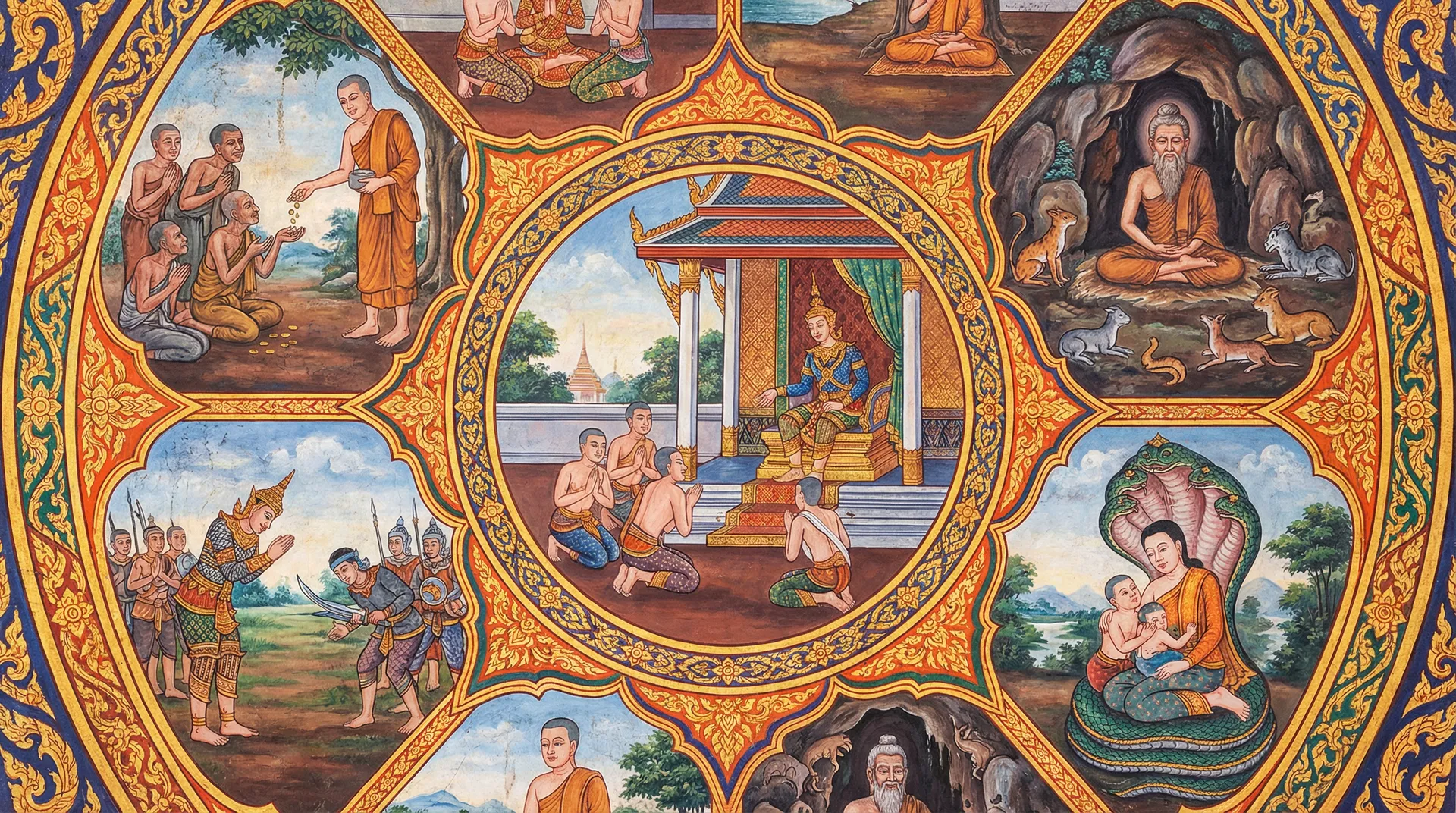 357Pañcakanipāta
Sattubhatta Jataka
Sattubhatta Jataka Long ago, in a time when gods and humans walked more closely, the great Bodhisatt...
💡 True wealth is not measured by possessions, but by generosity and the well-being of others. Greed leads to emptiness, while sharing brings true satisfaction and prosperity.
 326Catukkanipāta
Phra Sang Thong Jataka
Phra Sang Thong Jataka In the ancient kingdom of Suvarnabhumi, nestled between shimmering rivers and...
💡 True worth is found not in outward appearances or hidden identities, but in the courage, wisdom, and compassion one demonstrates through their actions.
341CatukkanipātaMātanga Jātaka
Mātanga Jātaka In the ancient city of Varanasi, nestled beside the sacred River Ganges, there lived ...
💡 True renunciation and humility are more powerful than any material offering or ritual in overcoming adversity and bringing about true prosperity.
 215Dukanipāta
Cullabodhi Jataka
The Courage of ConvictionIn the vibrant city of Savatthi, lived a prince named Bodhi. He was not the...
💡 True courage lies in upholding justice and compassion, even in the face of opposition. Lasting order and prosperity are built on mercy and understanding, not on fear and harshness.
 263Tikanipāta
Kaka Jataka
Kaka JatakaIn the heart of a dense forest, lived a wise and ancient crow named Kaka. Kaka was no ord...
💡 Wisdom, courage, and compassion are essential virtues for leadership, especially in times of crisis. By working together and following wise guidance, even the most daunting challenges can be overcome.
— Multiplex Ad —